Using AI is a smart move when researching, growing a business or drafting blog posts. It can write a business plan in 30 seconds. But how long do we spend analysing the output?
What I’ve found interesting is that AI moves far faster than we do. Its frame of reference is global. Yours and mine is shaped by where we grew up and what we’ve lived through. We came from Wagga Wagga, Wisconsin, Vancouver or Madrid. We studied podiatry or plastering, Pilates or philanthropy.
You get the idea.
The trouble is that AI can produce sophisticated, impressive and highly specialised material in areas we know very little about, and we can be instantly seduced by how polished it sounds.
Stop.
Read it.
Think about it. Check it.
A simple three-step rule:
Read the output slowly
Verify the facts
Check that the tone, style and format suit your audience and purpose
More importantly, before you even start prompting, plan.
For example, I’m building an app. I’m not a programmer, so I’m not naturally familiar with the contextual references, technical assumptions and pain points that matter in that world. I had to research that before I even put pen to paper, so to speak.
I needed to think much more clearly about my audience, constraints, parameters, preferences and objectives.
That saves a lot of unnecessary iteration. It also cuts down the maddening clean-up later: Never use “actually”. It’s redundant. Remove “Why this works”. Urgh.
At every step, evaluation matters. I’ve caught myself skimming and running. Skim and run, then trip.
More haste, less speed.
Sit with the advice or output you’ve just received. That’s how you work out what to refine in your question, your instruction or your constraints.
It’s a new way of thinking, but interestingly, I’ve found it has sharpened my critical thinking too.
In the twilight between what is real and what is fabricated, there exists a peculiar phenomenon known as “the liar’s dividend”—perhaps the most paradoxical gift of our technological age. As artificial intelligence grows more sophisticated in its ability to generate convincing falsehoods, those who trade in deliberate deception have discovered an unexpected windfall: when nothing can be trusted, everything becomes equally plausible.
Truth or Dare?
Consider a world where every image might be generated, every video potentially manipulated and every voice possibly synthesised. In this landscape of uncertainty, the ancient question “What is truth?” takes on new dimensions. The liar’s dividend manifests when bad actors exploit this uncertainty, claiming that genuine evidence of their misdeeds is artificial—mere fabrications conjured by machines. When everything can be fake, nothing needs to be true.
This dynamic creates a perverse incentive structure. The more sophisticated our AI systems become at generating convincing falsehoods, the more powerful the liar’s dividend grows. It’s as if we’ve created a philosophical perpetual motion machine, where advances in artificial intelligence simultaneously strengthen both the ability to create deception and the ability to deny truth. The very tools we develop to detect artificial content become weapons in the hands of those who would discredit authentic evidence.
Via ABC News 2022: Happy Feet by Thomas Vijayan
Would I Lie to You?
What makes this phenomenon particularly insidious is its democratic nature. Unlike sophisticated AI tools, which require expertise and resources to deploy, the liar’s dividend is available to anyone willing to invoke it. A corrupt politician caught on camera can simply claim the footage is deep-faked. A corporation faced with damning evidence can dismiss it as artificially generated. The mere existence of the technology becomes a shield against accountability.
A Frame of Reference
Yet within this crisis of truth lies a seed of opportunity. Perhaps the liar’s dividend will force us to evolve beyond our reliance on single pieces of evidence, pushing us toward more holistic systems of verification. In a world where any individual piece of evidence can be questioned, the truth may emerge not from singular proofs but from webs of interconnected verification, from the patterns that emerge when we step back to view the larger picture.
The rise of artificial intelligence has often been framed as a story about machines becoming more like humans. But the liar’s dividend reveals a different narrative—one about how AI is forcing us to confront our own relationship with truth. In an age where machines can lie convincingly, perhaps we will finally have to grapple with the full complexity of human truth-telling and truth-seeking.
The Evidence Shows…
Moving forward, our challenge is not merely technological but deeply philosophical. We must learn to navigate a world where the very concept of evidence has been transformed. The solution may lie not in better technology alone, but in better systems of trust, more robust networks of verification, and a renewed commitment to the patient work of truth-seeking.
The Tapestry of Truth
For in the end, the liar’s dividend reveals something profound about the nature of truth itself: it has never been simply about individual pieces of evidence, but about the broader tapestry of reality we weave together. As AI continues to evolve, so too must our understanding of what it means to know something is true. The greatest irony of the liar’s dividend may be that in making everything potentially false, it pushes us toward a deeper and more nuanced understanding of truth.
The Juxtaposition
Here’s the rub: The content in the above essay (bar the headings, some images and the words in this section) was generated by AI.
Did the article make you think? … And what do you think now?
I wanted to explore this topic philosophically. So, I prompted AI to help me consider the “liar’s dividend” concept in a way that would make sense to me—mentally and emotionally—and align with my values. What is true anymore? What can I trust; who can I rely on? My research on AI’s limitations, ethical practices and misuse of AI highlighted this quandary.
We scroll to find an amazing video, photo or “fact”… like the beautiful video of owls protecting their young I just saw on social media. Seems it’s not real.
Artificial Intelligence (AI) is transforming industries and reshaping how we interact with technology. This shift brings exciting opportunities—but also a challenge: adapt to change while staying intentional about how you use AI in daily life.
Note: If you are completely new to AI and need help choosing a tool, start with my post: How to Get Started with AI. You’ll also see it in action, so you can try it for yourself!
AI can be a powerful assistant, yet it’s easy to over-rely on it and lose your unique perspective. Just as important as using AI wisely is knowing when to step away—disconnecting from technology, embracing quiet moments and making space for deeper thinking, creativity and human connection.
This article explores why AI matters, the difference between Large Language Models (LLMs) and AI applications, the strengths of today’s most widely used models, and strategies to find balance. By the end, you’ll have a clearer understanding of which AI tools fit your needs—for work, learning or personal projects.
Choosing the right AI tool is a bit like choosing the right restaurant—what works best depends on what you need. But before we get to that, let’s explore why AI matters.
Why AI and LLMs Matter
Historically, technological revolutions have changed how we live and work. Just as the Industrial Revolution transformed the world, AI is changing how we work, communicate and solve problems.
In an interesting March 2020 Forbes article, Rob Thomas, then General Manager of IBM Data, drew three compelling parallels:
Language: Just as a common business language enabled global trade during the Industrial Revolution, AI learns our languages through Natural Language Processing (NLP), understanding not just words but meaning and intent. We’re also developing a shared AI vocabulary—terms like ‘LLMs’ and ‘prompt engineering’ help us communicate effectively about and with these systems.
Automation: In the 1780s, Oliver Evans revolutionised flour mills by creating an automated pulley system to carry wheat sacks—previously done by hand. Today, AI automates routine tasks, freeing us to focus on creativity and complex problem-solving.
Trust: The Industrial Revolution moved us from face-to-face trading to trusting in brands. Similarly, we’re learning to work with AI—but just as humans can have biases, AI learns from human-created data and can reflect these biases. This is why we need to use AI thoughtfully and always verify its output.
Large Language Models
If we are to adopt new technologies, it’s crucial to understand their fundamental capabilities. How do models like ChatGPT function? What sets an LLM apart from AI-powered tools like Grammarly?
The Waiter Analogy
I love analysing personality profiles, and during my yoga teacher training learned about the “doshas” or Ayurvedic constitutions through a waiter analogy that stuck with me.
So, let’s explore commonly used LLMs and AI tools by imagining a restaurant called the “digital dining room”—a collective space with cafés and diverse culinary styles. In this space, LLMs and AI applications act as skilled waiters, each with unique strengths in serving your needs. We’ll start with LLMs.
Claude, ChatGPT, Gemini & Microsoft CoPilot
ChatGPT (The Friendly Waiter): Amiable and flexible, ChatGPT remembers your order from your last visit. Need recommendations, small talk or a quiet meal? No problem. Sometimes, it will make up interesting stories to keep you entertained.
Claude (The Thoughtful Waiter): Detail-oriented and insightful, this LLM takes time to explain the menu, offering thoughtful suggestions based on your preferences. Claude treats all patrons fairly and sticks to the restaurant’s rules.
Google Gemini (The High-Tech Waiter): Equipped with a tablet, Gemini shows you dish previews and offers interactive features like dietary filters and AI-powered wine pairings. Gemini has connections in the restaurant industry, enabling solid recommendations.
Copilot (The Efficient Waiter): Professional and to the point, Copilot is like a waiter in a busy corporate café—streamlining your order, remembering your usual and ensuring everything runs smoothly, with minimal fuss.
DeepSeek (The Disruptive Newcomer): Known for handling extensive orders, this waiter chats in detail about the menu and can write elaborate descriptions of dishes. However, it doesn’t remember your previous orders and hasn’t yet moved to using a tablet to take orders.
While it has the cutest logo…
…after testing DeepSeek’s current capabilities here, I found that it falls behind in offerings.
Fun Quiz – See a Claude artefact in action….
Ever wondered what kind of AI-powered waiter you’d be in a bustling restaurant? Are you the chatty all-rounder, the deep-thinking sommelier, the high-tech innovator, or the no-nonsense efficiency expert? Take this quiz to find out!
I often use ChatGPT as a first option, given that it remembers (some of) the context shared in previous chats and offers live browsing capability.
While Claude doesn’t currently accommodate live internet browsing, I’ve found it to be the most cautious about giving ethical and accurate advice, and less likely to hallucinate (get creative when it doesn’t know an answer). It’s also useful for producing interactive quiz games.
However, the free model of Claude Sonnet gets busy frequently, and when asked to code, its memory gets full quickly…
Other LLMs
While ChatGPT, Claude, Gemini and Microsoft Copilot are among the most well-known LLMs, other models like Mistral (France), Meta’s LLaMA (US) and Baidu’s Ernie Bot (China) are also shaping the AI landscape, with various capabilities and applications.
AI Applications
Where do AI applications fit in? Here are some examples:
Grammarly (The Proofreader): The restaurant’s quality control, ensuring every dish (or sentence) is polished before it reaches your table.
Jasper & Copy.ai (The Marketers): The restaurant’s marketing team, crafting mouthwatering descriptions to draw in customers.
NotebookLM (The Research Restauranteur): Your knowledgeable assistant, offering in-depth insights, summaries, podcasts and detailed information based on the information you provide to it. You can see it in action here.
A Note on Evolution & Ethics
The AI landscape is constantly evolving, so these waiters are always learning new tricks and refining their service… Like restaurant menus change over time, so do LLM capabilities. The above comparison reflects the current state of these models. So keep an eye out for future updates!
Privacy matters, and what you share with AI is not necessarily private; for example, “Copilot uses AI. Check for mistakes. Conversations are used to train AI. Opt out in your Copilot settings…”.
And just as restaurants follow food safety guidelines, ethical AI use ensures reliability and fairness. For an in-depth look at AI ethics, check out this article.
Strategies to Find Balance in an AI-Driven World
AI enhances productivity, creativity and efficiency, but using it mindfully is just as important as knowing when to use it at all. In 100 Things We’ve Lost to the Internet, Pamela Paul reminds us of the quiet moments technology has eroded—spaces once filled with reflection, deep thinking and genuine connection. The rise of AI makes it even more crucial to reclaim these moments.
Balance doesn’t mean rejecting AI; it means setting intentional boundaries. Stepping away from technology allows you to reconnect with your thoughts, look after your body, enjoy nature and give creativity room to breathe. Turning off notifications, setting screen-free times and carving out moments for quiet reflection can help maintain perspective. For a practical reset, try a guided meditation—sometimes, stepping back is the best way forward.
Conclusion
AI is already transforming industries, automating tasks and enhancing creativity. But like any tool, its value depends on how you use it. Understanding LLMs and AI applications helps you get the best results while staying true to your voice.
As AI capabilities expand, the key is to adapt, experiment and use these tools responsibly—to enhance, not replace, human expertise. That also means knowing when to step back, embrace quiet moments and reconnect with your body and mind. Stay curious, think critically and take breaks from technology to recharge.
Want to explore AI in a way that supports your creativity and decision-making? The Chatterbox AI Fundamentals and Prompt Engineeringspecialisation courses are coming soon! There are countless options out there to learn.
What sets this training apart? The focus is on:
Ethical use: using your knowledge to support others
Specialisation: tailored to your profession or interests
Interactivity: practical applications and hands-on activities to cement your learning
Balance: more strategies to balance technology usage with creativity
Get in touch if you’re interested in an early bird discount. Let me know your area of interest!
If you’re new to AI and want to start using it on your PC or mobile device, this guide will walk you through the basics. You’ll learn how to access the ‘Big Four’ tools—ChatGPT, Claude, Gemini and Microsoft Copilot—as well as the research tool NotebookLM.
A Quick Tip for 2025: While these tools all ‘chat’, they have developed distinct personalities. ChatGPT is great for general conversation; Claude is excellent for writing and coding; Gemini connects with your Google Apps; and Copilot is fantastic for web searching.
Start Using Large Language Models (LLMs)
Note: Watch out for imposter apps. Look for these icons:
ChatGPT (by OpenAI)
Best for: General conversation, voice interaction and creating images.
On Mobile: Download the official ChatGPT app (iOS/Android). Look for the black and white logo.
Pro Tip: Try the Headphones icon to talk to ChatGPT using Advanced Voice Mode—it feels like a real conversation.
Key Feature: When you ask Claude to write code or a document, it often opens a separate window (called an ‘Artifact’) on the right side so you can view the work clearly while still chatting on the left.
Gemini (by Google)
Best for: Connecting with Google docs like Gmail.Gemini Pro includes expert research, image & video creation features.
On Mobile:
Android: It is often pre-installed or can replace your ‘Google Assistant’. If not, download the Google Gemini app.
iOS: Download the Google app (Gemini is a tab inside it) or the standalone Gemini app if available in your region.
What it is: Unlike the chatbots above, NotebookLM requires you to upload sources (PDFs, website links, notes, Google Docs). It then becomes an expert on only that information.
The ‘Podcast’ Feature: Once you upload your documents, click the ‘Audio Overview’ button. Two AI hosts will generate a radio-style conversation summarising your content. It is stunningly realistic!
How to Interact with LLMs (Prompting 101)
Talking to an AI is called ‘Prompting’. Here is how to get the best results in 2025:
Talk like a human: Speak or write as if you are emailing a helpful intern.
Give Context: Be as clear and specific as possible. For example, say, “Write a polite email to my manager asking for Friday in a fortnight off because I have root canal surgery.” Detailed prompts yield better responses.
Iterate: The first answer is rarely perfect. If needed, rephrase or add context. Tell the AI what you need – a more concise version (add word count), more humour or a more formal tone.
Check the facts: AI can still make mistakes (hallucinations). Always double-check important info; review the response to assess accuracy and relevance.
Examples of AI Capabilities
ChatGPT (Voice Mode):Tap the headphone icon and say: “I have an interview for a sales job tomorrow. I’ve shared the job description and my resume. Can you roleplay as the interviewer and ask me tough questions?”
Claude: “I am uploading a photo of my garden. What kind of plant is this, and can you write a care schedule for it?”
Gemini: “Critically analyse the attached meeting notes (e.g. Word or Google doc). Summarise the meeting notes and draft an email to the team with the action items.”
Copilot: “Search the web for the best tech-free birthday party ideas for a 16-year-old in [Your City] for this weekend.”
NotebookLM:Upload a complex PDF article. “Generate an Audio Overview so I can listen to this while I drive.”
AI in Action
Click on theimages to see the AI tools in action.
ChatGPT – “Please summarise one of my favourite books – The Four Agreements!”
Gemini – “Translate ‘Hello, how are you?’ into Japanese. Explain how to address different audiences to show respect.”
MS Copilot – “Brainstorm some ideas for a birthday party for a sixteen-year-old girl with five friends attending. Suggest creative activities that don’t involve technology. Before you proceed, ask me questions to refine your response.”
Conclusion
AI tools are transforming how we work and create. The steps outlined above will help you integrate these technologies into daily life.
Strategies to Find Balance It is easy to over-rely on technology. In 100 Things We’ve Lost to the Internet, Pamela Paul reminds us of the quiet moments technology has eroded.
Set Boundaries: Try “tech-free” hours where you do not consult AI.
Think First: Try to solve the problem yourself before asking the AI. Use AI to refine your work, not do it all for you.
Reclaim Quiet: Step away from the screen. For a practical reset, try a guided meditation—sometimes, stepping back is the best way forward.
In the ever-expanding universe of content creation, artificial intelligence (AI) has become a powerful ally. But with great power comes great responsibility.
I slept well last night; didn’t get up once. You may say this is the way things should be, and I’d agree. But it’s not so usual for me.
I think it’s because I sleep better when my spirit feels lifted, as it has since this morning. I swam in the sea (always good for the soul) and continued my reading of The Dalai Lama’s Cat, where Mousie-Tung is enlightening me… sorry!… Rinpoche, “precious one”, little Snow Lion… is letting me in on the ways of the monks.
Image created using CoPilot Designer, powered by DALL-E 3
Bear with me. Our topic today is the ethical use of generative AI during intergalactic travel. Now in the company of Rinpoche as our ethical guide, let’s get into it.
Using generative AI responsibly
Generative AI can be a powerful tool for content creation—helping you generate ideas, saving time and enhancing creativity. But it can also pose some ethical challenges, as there is the potential for it to create content that is misleading, inaccurate, harmful, or even illegal.
How can you use generative AI responsibly and avoid interstellar mishaps? In this blog post, I’ll share some examples of the misuse of generative AI, some tips and tricks to use it ethically, and some resources to learn more.
Examples of misuse
Before we get into the ethics of generative AI, let’s look at some examples of how things can go wrong. Readers, my first example stems straight from researching content for this blog. The examples I initially unearthed, each with a reference (e.g. [Story] – Source: The New York Times), did not seem entirely authentic, so I checked and asked for citations. This is the reply:
Copilot
“I’m sorry, but I couldn’t find any credible sources to verify the specific incidents mentioned in the text you provided. It’s important to note that while the scenarios described are plausible and reflect real concerns about the misuse of generative AI, without verifiable sources, they should be treated as illustrative examples rather than factual occurrences.”
Fear not!
I eventually found what I was looking for…The scenarios listed below show the risks and harms of generative AI and why we need to be careful.
Hallucinations
Definition: When AI generates information or output that is nonsensical or inaccurate because it sees patterns or objects that don’t exist or are invisible to humans—like seeing shapes in the clouds (Source: IBM).
In Ronnie Sheer’s LinkedIn course Prompt Engineering with ChatGPT, he states: “Large language models (LLMs) such as ChatGPT are very impressive. They can, however, be inaccurate and sometimes even make up things. It’s often said that models such as ChatGPT are 90 or 97% accurate, but 100% confident”.
Image created using CoPilot Designer, powered by DALL-E 3
A Lawsuit
In 2023 in Mata v Avianca, lawyers filed a brief with a New York court that included fake quotes and case citations generated by an AI tool. They didn’t know this could happen, nor did they check the cases they cited. The court threw out their client’s case, sanctioned the lawyers for bad faith, and fined them and their firm—exposing their actions to public scrutiny (Source: New York Times).
In politics, US president Donald Trump’s onetime personal lawyer, Michael Cohen, says he unwittingly passed along to his attorney false AI-generated legal case citations he found online before they were submitted to a judge (Source: UNSW).
“At the very least, technology competence should become a requirement of lawyers’ continuing legal education in Australia”.
Michael Legg & Vicki McNamara
Deepfakes: The Double-Edged Sword of AI
Definition
A deepfake is a synthetic media where AI is used to manipulate or generate visual and audio content, creating results that can be highly deceptive (Source: Mirriam-Webster).
The Rise of Celebrity Deepfakes
Celebrities like Taylor Swift have become targets, with their deepfakes appearing on social media, demonstrating the technology’s potential for misuse (Source: The New York Times).
Deepfakes for Good
Conversely, deepfakes can serve positive purposes. For instance, David Beckham’s participation in a malaria awareness campaign used deepfakes to portray him speaking nine languages, amplifying the campaign’s reach (Source: Britannica).
The Liar’s Dividend
This era of misinformation has given rise to the “liar’s dividend,” where individuals exploit the climate of doubt to dismiss truths as deepfakes (Source: Psychology Today).
It’s crucial for individuals and organisations to verify the authenticity of information before sharing it, and use (or check that your organisation uses) advanced tools and techniques to detect deepfakes.
Plagiarism
Stanford University AI Plagiarism Scandal
In May 2024, three Stanford University authors released a language model (called Llama3V) which was accused of copying another AI model “MiniCPM-Llama3-V 2.5” from a Chinese startup. A GitHub user discovered the similarities and two of the authors apologised (Source: Plagiarism Today).
AI detectors are becoming more sophisticated in tackling these issues. They’re designed to detect AI-generated content and compare texts against massive databases to find plagiarism. They’re part of a suite of tools to ensure originality of content.
For example, Scribbr’s AI Detector can detect content generated by popular AI tools like ChatGPT, Gemini and Copilot, and is used alongside plagiarism checkers to verify text.
Prompt Hacking
In the LinkedIn Learning course Mitigating Prompt Injection and Prompt Hacking, Ray Villalo explains how a hacker could tell ChatGPT to act as a writer. The author would ask how a character would go about doing something illegal (pretending that the description is intended to be purely fictional and used for creative writing) … a fake guardrail.
Similarly, when companies adopt LLMs into their platforms, prompt hackers can use malicious prompts to gain access to sensitive or confidential information and leak internal data from a company’s resources.
Villalo comments, “Part of implementing an AI security plan should include a thoughtful approach to dealing with prompt hacking”.
Summary of key ethical issues
1. Copyright Infringement&Intellectual Property Misuse: AI-generated content can mirror copyrighted works, leading to legal issues. This necessitates originality and respect for intellectual property. There’s also a concern about the originality of AI-generated content, making it useful to clarify ownership and creative rights in AI contributions.
2. Data Privacy: Generative AI’s reliance on vast datasets raises concerns over the potential mishandling of personal information. This can be mitigated via strict data handling and consent protocols.
3. Bias and Discrimination: AI systems can inherit biases from training data. Therefore, it’s imperative to regularly audit and adjust AI for fairness and inclusivity.
4. Misinformation and Fake News: Given AI’s capacity to fabricate convincing but false content, companies and individuals will benefit from strengthening verification processes and promoting digital and media literacy.
Tips and tricks to use generative AI ethically
So, how can you use generative AI ethically in content creation? Here are some tips and tricks to help you out. They are based on the principles of honesty, accuracy, transparency and respect, which are essential for ethical communication and journalism.
They are also inspired by the wisdom and humour of Douglas Adams, who taught us how to cope with the unexpected and the absurd in the universe.
Check (and re-check) your sources: Don’t panic… but do pay attention. Generative AI can produce amazing and surprising content, but it can also produce nonsense and errors. Don’t blindly trust or reject the AI output but examine it carefully and critically. Check the facts, the sources, the logic and the language. Use your common sense and your knowledge. If something seems too good or too bad to be true, it probably is.
Be transparent: Don’t forget your towel… but do cite your sources. A towel is a useful item to have in the galaxy, as it can serve many purposes and signal that you are a hitchhiker (see the end of this blog for a handy list!). Similarly, citing your sources is a useful practice to have in content creation, as it can serve many purposes and signal that you are an ethical writer.
Citing your sources can help you avoid plagiarism, support your claims, acknowledge your influences and guide your readers. If you use generative AI to create or enhance your content, you should always disclose it and cite the AI tool or model you used, as well as the original sources or data it used.
Image created using CoPilot Designer, powered by DALL-E 3
Data privacy / Bias and Discrimination
Check your organisation’s protocols: If you are using generative AI to support productivity, make sure there is clarification for this practice within your organisation. Check the regulations, constraints, licencing levels and parameters. Promote the benefits and possibilities of using AI within an ethical framework.
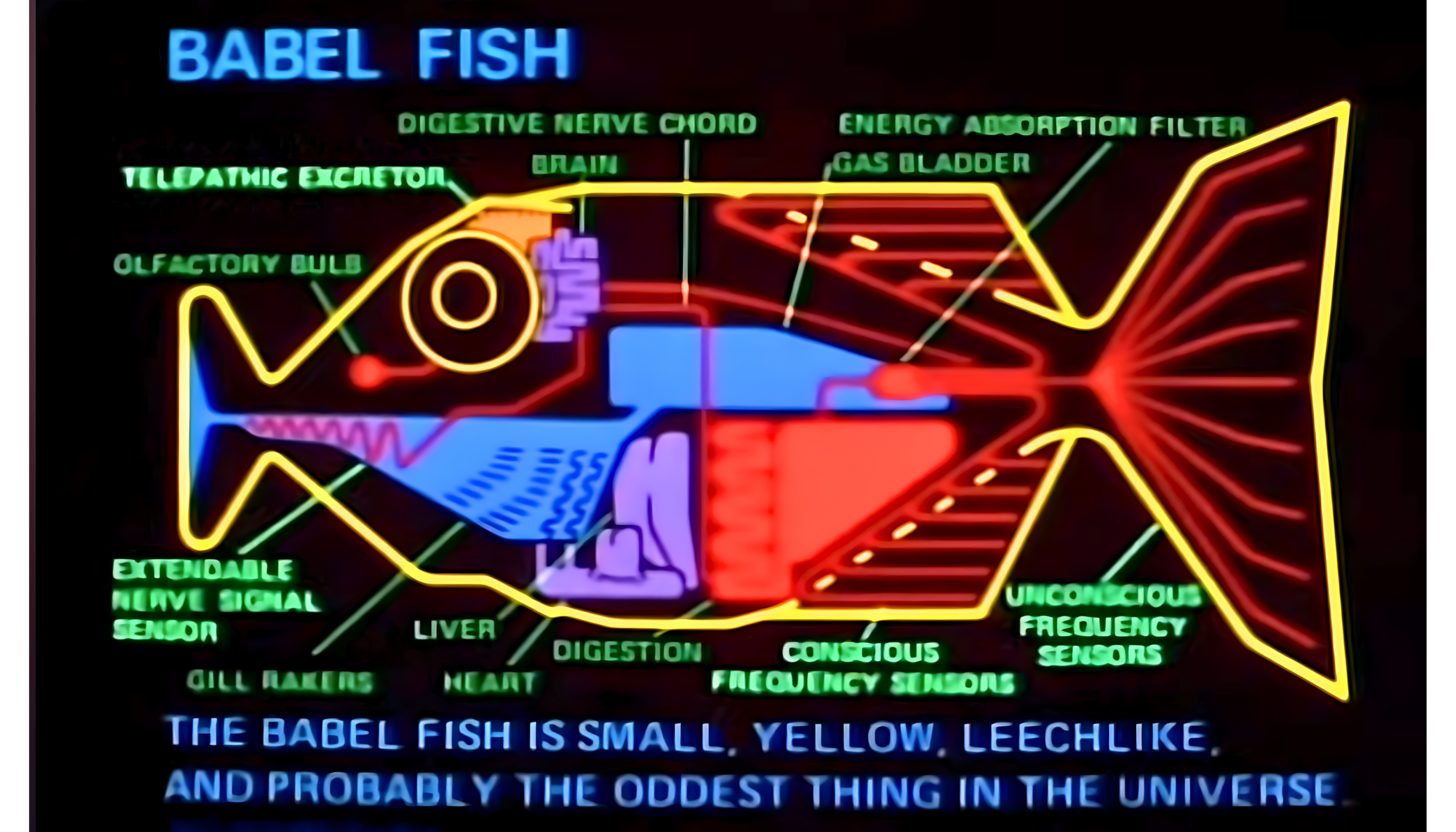
Respect your audience: Don’t rely on the babel fish but do respect your audience. In The Hitchhiker’s Guide to the Galaxy, the babel fish (check out this clip from the 2005 film) is a small creature that can translate any language instantly and perfectly, as long as you stick it in your ear. It sounds like a convenient and helpful device, but it can also cause trouble and misunderstanding by forgetting the cultural and contextual differences between languages and speakers.
Similarly, generative AI can disregard the cultural and contextual differences between languages and audiences. Always respect your audience’s needs, preferences and values—as well as their privacy and consent.
Source: BBC via YouTube
Avoid bias: When referencing sources, consider their transparency of funding, staff credentials, rigour of research methods, and balance in reporting.
Companies and individuals can strive to train AI models on diverse and representative datasets to minimise the risk of inheriting biases. Regularly evaluate AI output for bias, adjust the model for fairness and inclusivity, and use processes that prevent AI from using biased information.
Avoid plagiarism: Use plagiarism detection tools to verify the uniqueness of content before publication.
Use data controls: Configure your environment for optimal privacy. For example, in ChatGPT, open the menu and navigate to Settings, then head to Data Controls and toggle off Chat History and Training. Save your content on a Notepad or application instead.
Misinformation and Fake News
Use verification processes: A positive first step we can take is to amp up our media and digital literacy. Always verify sources, and when we use AI to create, first check in with your companion Snow Lion. Is your content original? Does it add value? Is it making the world a better place?
Channel AI to augment your creativity: Be creative and original, and know where your towel is (i.e., use your resources, including generative AI… Emulate a “hoopy frood” [really amazing altogether guy] in The Hitchhiker’s Guide to the Galaxy).
However, beware! Generative AI will help us create cool and confident content, but it can also make us smug and arrogant. Use generative AI as a tool to enhance your creativity, not as a crutch to replace it. Remain humble and open-minded, and learn from generative AI, rather than copy from it.
By implementing these strategies, content creators can ethically leverage generative AI while ensuring their work remains original, unbiased and valuable to their audience.
A three-pillar framework
“Any new technology is only as ethical as the underlying data that it’s trained on. For example, if the majority of our consumers to date have been of a particular race or gender when we train the AI on that data, we’ll continue to only design products and services that serve the needs of that population”.
Responsible data practices: Employ human oversight. Always review and refine AI-generated content to ensure it aligns with ethical guidelines and maintains the creator’s unique voice.
Dhar poses four questions: What is the source of the training data of the LLM you are using? What has been done to reduce bias in the data? How might the data we’re using perpetuate historic bias? What opportunities exist to prevent biased decision-making?
Well-defined boundaries on safe and appropriate use: Define your target audience’s primary goals and elect the most responsible way to achieve those goals.
Robust transparency: Be open about the use of generative AI in content creation. This includes disclosing when AI has been used to generate or assist in creating content.
In addition, consider the three questions posed by Dhar: How did the tool (LLM) arrive at its output? What other ways do we have of testing fairness? Can decision-makers easily understand the input-analysis-output process?
Postscript: Ethical Considerations in 2025
The ethical use of AI is in all of our hands. We can use AI to help us brainstorm, summarise topics within our area of expertise, plan trips, care for our garden and create recipes. AI can stimulate new ideas and help us think more broadly.
The trouble starts if we rely on AI to “write for us” or blindly trust its output. Ethical use not only applies to copyright, privacy and bias. The effects of using AI without oversight can be devastating—even on a purely personal level. For example, no poet or artist wants to lose faith in their craft, and there is no joy in regurgitating words and images.
Apart from inner guidance, fortunately our leaders recognise the need for guardrails. The United States Copyright Office has released two reports on AI and copyright. The first focused on regulating the use of AI to replicate people’s likeness, for example through deepfakes.
The Washington Post summarised the second report’s findings as hinging on human creativity: “… art produced with the help of AI should be eligible for copyright protection under existing law in most cases, but wholly AI-generated works probably are not”.
In Australia, the Federal Government has released AI ethics frameworks and committed $124 million to the National AI Centre, demonstrating the national commitment to responsible AI adoption. In government, the focus is on “ensuring the appropriate, safe and effective use of technology tools, including AI”. Additional recommended steps include implementing an “enrolment mechanism to register and approve staff user accounts to access public generative AI platforms”.
Conclusion
I’m excited about generative AI. Why? My mind runs wild with creative ideas and dreams. Maybe, just maybe, they can now come to life.
And maybe we can all use AI to make life a whole lot more interesting… a whole lot more productive, or simply a whole lot better. Just remain mindful of the “Deeper Meaning of Liff” and reference your inner moral compass.
We’re simply guiding a pattern of code, so we can’t get smug about it. Working toward digital literacy is great. Thinking that our investment makes us superior, or believing we have superpowers for generating awesome prompts… is not. Just ask any Balinese cat that grew up in a Buddhist enclave. Don’t even think about accolades if you bring a mouse home. They will save the mouse, set it free in the woods and put you to shame.
When dealing with AI-generated content, check in on your intuition… it might just hold the key to avoiding interstellar mishaps! Our job is to illuminate truths, foster understanding, and enrich the tapestry of human experience.
AI is new to us like things were new to our ancestors a hundred years ago. Think of the invention of the camera. The wheel turns!
Yours in creativity, humility and ethical use of AI,
Annie.
PS. Dear reader, should you ever feel lost in the digital expanse, “Don’t Panic.” I invite you to join the conversation. Share your thoughts, experiences and insights on ethical AI use. Together, let’s take ownership of responsible innovation and ensure that the future of AI content creation is as bright and benevolent as the minds behind it.
Join me in future posts for some useful tips on prompt design. I’m no engineer!
PSS. I used AI to augment content in the process of creating this post. Just like we use Google for research, because I don’t know it all! Neither does the babel fish or Copilot.
And if you need a stretch after all that, my training partner and I have your back. Take just three minutes of floor time. Look after your body.
Work with Me
Are you looking to harness the power of AI for your business, or would you like me to prompt for you? Whether you need compelling blog posts, engaging content for your business, or polished PowerPoint presentations, I’m here to help. With expertise in AI-assisted writing and content creation, I can provide tailored solutions that meet your needs.
U.S. Copyright Office. (2025). Copyright and artificial intelligence, Part 2: Copyrightability report. U.S. Copyright Office. https://www.copyright.gov/ai-report-part2
“What Are AI Hallucinations??” – An article by IBM discussing the phenomenon where AI perceives nonexistent patterns or objects.
In Douglas Adams’ “The Hitchhiker’s Guide to the Galaxy,” a towel is described as the most massively useful thing an interstellar hitchhiker can have. Here are some of its uses:
– Warmth: You can wrap it around you for warmth as you bound across the cold moons of Jaglan Beta.
– Beach mat: Lie on it on the brilliant marble-sanded beaches of Santraginus V, inhaling the heady sea vapors.
– Sleeping cover: Sleep under it beneath the stars which shine so redly on the desert world of Kakrafoon.
– Sail: Use it to sail a miniraft down the slow heavy River Moth.
– Combat: Wet it for use in hand-to-hand combat.
– Protection: Wrap it around your head to ward off noxious fumes or avoid the gaze of the Ravenous Bugblatter Beast of Traal.
– Distress signal: Wave your towel in emergencies as a distress signal.
– Drying off: And of course, you can dry yourself off with it if it still seems to be clean enough.
Moreover, a towel has immense psychological value. If a strag (non-hitchhiker) discovers that a hitchhiker has his towel with him, he will assume the hitchhiker is also in possession of a multitude of other items and may lend whatever the hitchhiker might have “lost”. The phrase “knows where his towel is” became a way to say someone is a person to be reckoned with. It’s a fun and quirky element that has become a cultural icon among fans of the series!
Source: Conversation with Copilot, 18/06/2024, most cited source: YouTube.
A guide offering three simple ways to use AI to improve your writing without losing your voice. Embrace the power of AI without compromising your creativity and authenticity 😊
Image created using Microsoft Copilot, powered by DALL-E 3
Introduction
In this digital age, it sometimes feels as though our minds and senses are overwhelmed with an excess of information and new technologies. The prospect of this AI beast can smell bad, a space invader, for those of us with a creative bone or two in our bodies.
I’ve been riding that rollercoaster in my mind, but… last night I had a “nightstorm”. Here is my brand-new word’s definition:
Nightstorm (noun)
/ˈnītˌstôrm/
Definition: A solo brainstorming session characterised by the quiet of the night that fuels the chaos of ideas, often leading to unexpected bursts of creativity and insight.
Example: After hours of tossing and turning, she experienced a nightstorm that led to the outline of her novel.
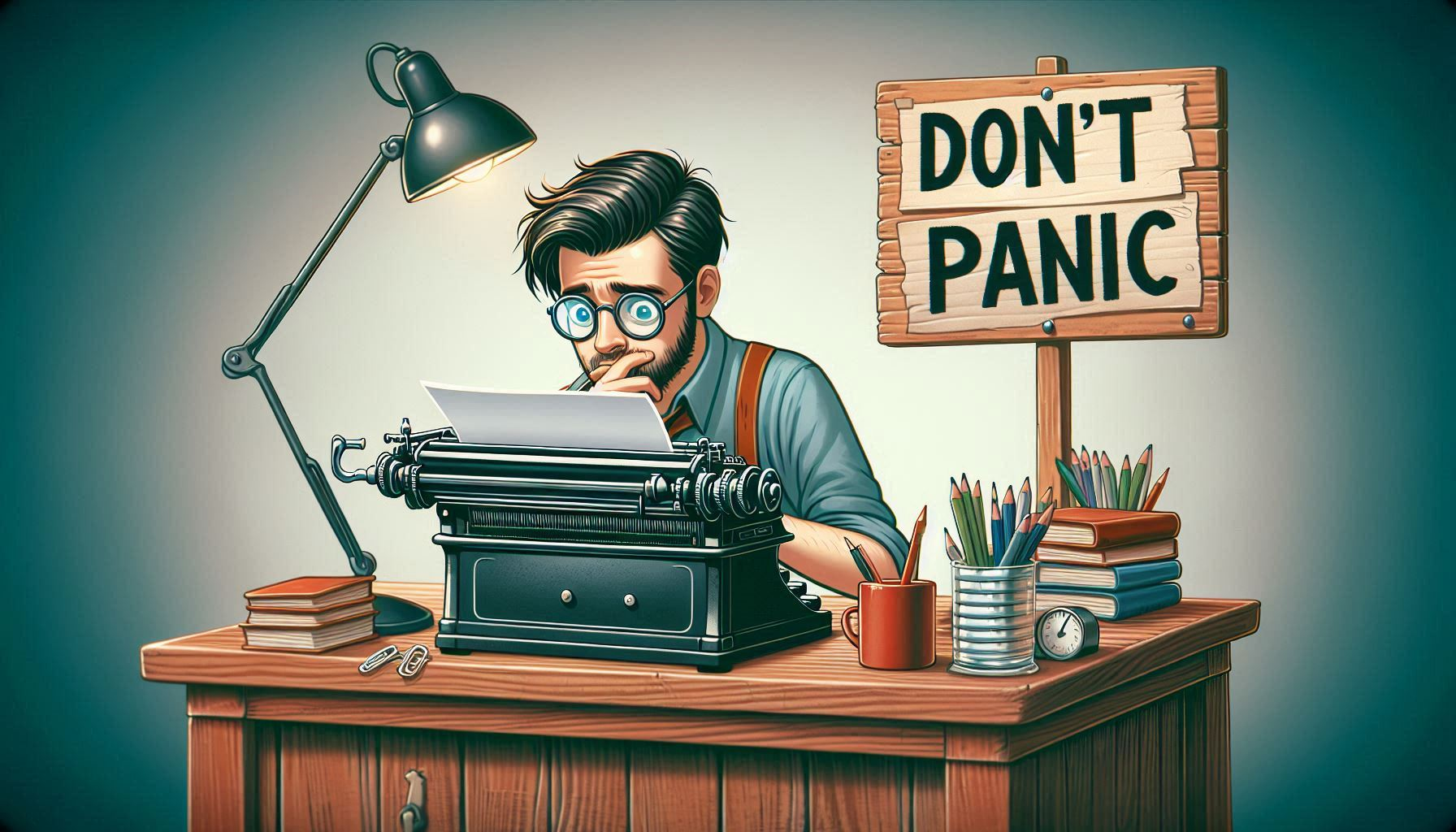
Don’t panic
Remember the tune “Video Killed the Radio Star”? Radio lives on. Teenagers love vintage vinyl and dusty old books made of paper.
So… DON’T PANIC.
Like the usefulness of a towel in intergalactic travel in The Hitchhiker’s Guide to the Galaxy (a classic read), AI will be your most useful companion from now onwards… if you remember to pack it and use it properly. Then your creativity, your love of words, your adventurous spirit is what will shine through.
What are Large Language Models and Why Should You Care?
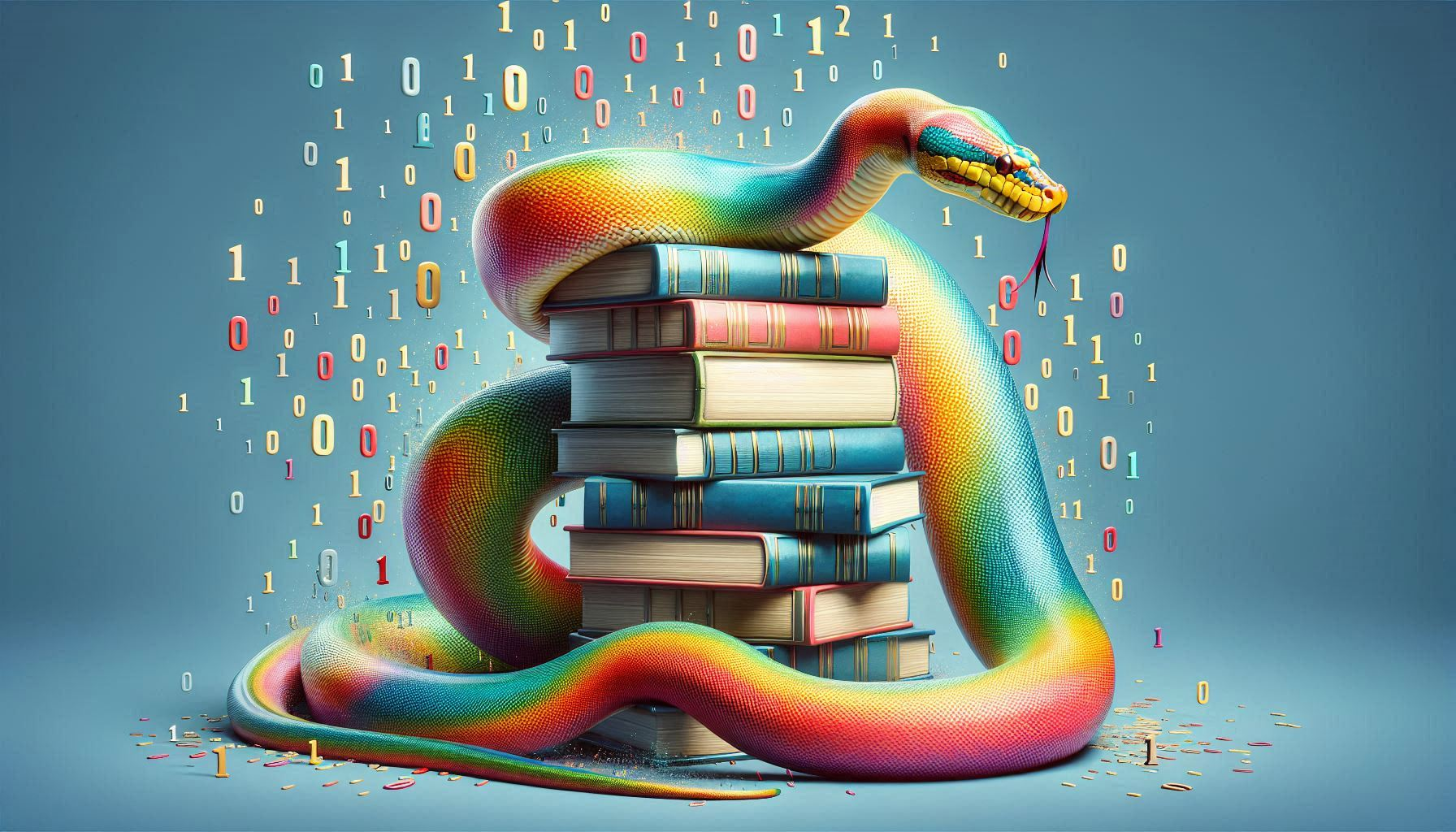
If you don’t know what an LLM is, don’t worry. A year ago, I didn’t either. Read on. I want to talk to you about my experience with using Large Language Models (LLMs) to help create content, without any knowledge of coding. In fact, the only Python I know is a jelly snake.
Image created using Microsoft Copilot, powered by DALL-E 3
LLMs, like ChatGPT and Claude, are systems that can generate natural language text based on a given input. They are trained on massive amounts of text data from various sources, such as books, websites, social media, and news articles. They learn the patterns and rules of language, such as grammar, syntax, vocabulary and style from these data sources. They can then use this knowledge to produce new text that is coherent, relevant, and sometimes even creative.
Why should you care? Because LLMs can help you with many aspects of your writing process, such as brainstorming, researching, outlining, drafting, editing and proofreading. They can save you time, energy and frustration. They can also inspire you, challenge you and surprise you. Think of them as collaborators.
A Taste of AI-Powered Creativity
A few days ago, I was curious to see what an LLM could do to help me with a simple problem. I wanted to prepare a flavourful stir-fry for my partner, who can’t eat spicy food. Usually, I’d be scratching my head, resigning to a bland meal. Instead, I turned to claude.ai. Minutes later (after a little chat with Claude), I had a recipe for Zing-a-ling Veggie Noodle Stir-fry. It was delicious!
Here is the initial prompt I used:
Hello! My partner gets a reaction to onion, garlic, chilli, curry and strong spices, so he can’t eat that. Too much pepper is also no good for him. I want to make a stir-fry dish that is still flavourful without these ingredients, but I don’t want to use too many ingredients as it would spoil the dish. I have the following key ingredients: 250g superfood fresh sliced vegetables, 300 chicken breast and 450g fresh Hokkien noodles, 200g sliced mushrooms, and the following sauces: Fish, Hoisin, Oyster, Soy, Worcester, Tomato .Also in my pantry: olive oil and all the most commonly found ingredients in an Australian household. Ask me any questions you need to, then suggest a recipe with a list of ingredients, instructions and a catchy name for the recipe. Go!
The above is an example of a Vision (Multimodal) prompt using the following techniques:
Context Establishment: Providing background information and specific constraints to shape the response.
Detailed Instructions: Clear directives on what the response should include.
Constraints/Delimiters: Limitations that define the boundaries of the acceptable response.
Outcome Specification: Stating the desired outcome and expectations from the response.
Socratic Questioning: Inviting the model to ask questions if more information is needed.
Three Simple Ways to Use AI to Enhance Your Writing Without Losing Your Voice
This isn’t just about recipes; it’s a glimpse into how AI can spice up our writing without overpowering our unique flavours.
What I learned from many hours of study is that LLMs are not perfect, but they are powerful. They can help you generate ideas, find information and write faster. But they can also make errors, miss nuances and lack originality.
They can’t replace your voice, your style, your personality, your emotions, your values, your opinions, your experiences, your stories. They can’t replace you.
So, how can you use AI to enhance your writing without losing your voice? Here are three simple ways to use AI to improve your writing without losing your voice:
Use LLMs as tools, not as masters. Don’t let them dictate what you write, how you write, or why you write. Use them to assist you, not to replace you. In future posts, I’ll share how we can phrase prompts as a tool to best augment your text.
Tailored prompt engineering is the key!
Use LLMs as sources, not as authorities. Don’t blindly trust what they generate; check their facts, their logic, their tone, their ethics. Use them to inform you, not to deceive you.
My next post will explore this topic and the ways we can implement an ethical approach in our writing and content creation.
Use LLMs as partners, not as rivals. Don’t fear them, embrace them. Don’t compete with them, collaborate with them. Use them to inspire you, not to intimidate you. Future posts will look at ways we can channel AI for creativity.
As a first step, try CoPilot’s designer (see the next section)!
Explain your image by starting with: Please design a high-resolution digital image of… [e.g. a hippopotamus riding a bicycle on a beach at sunset, holding a sign that says, “Don’t Panic!”]. Be polite, detailed and specific. Trust me on the “polite” angle; the models are trained on human data. Be nice. Go!
Embrace the Change
Change can be intimidating, but it’s also a gateway to growth. In this series of posts, I’ll share tools, terminology and techniques to help you start, or get more effective, with AI-assisted writing. And I’ll offer advice as practical as a towel in intergalactic travel (thanks, Douglas Adams!).
Try it!
If you haven’t yet, sign up for ChatGPT. Here’s a simple guide:
Click “Sign Up” and create an account with your email or use Google/Microsoft for quick access.
Verify your email and choose between free or paid plans.
Start using ChatGPT by entering prompts in the chat window.
And/or… try a free trial of Microsoft Copilot.
Add Value
There is no value in regurgitation; any astute reader knows that if you “embark on a journey” or “navigate your course”, this is likely a trip arranged by AI. You want to retain your authentic voice. So do I.
I wrote this blog post from scratch, then got some help with headings, prompted for images and asked for feedback. Around 15% of this post was edited and rewritten as a result.
Conclusion
Stay tuned, and don’t panic. You are the writer; you have the power. You have the voice. Check in over the next few weeks to learn more about prompt engineering and the terminology of the day, along with practical tips to use this, important words about ethics and pitfalls, and more.
Share your thoughts and curiosities about AI in writing. Your insights will help shape the content of this blog.
Let’s Do This. Remember, in the vast universe of AI writing, don’t panic. And take a towel.
Image created using Microsoft Copilot, powered by DALL-E 3 & edited in Canva Pro
Yours in Zen and AI,
Annie.
If you need to meditate after this, I’ve got your back too. Head to YouTube.
Resources
LinkedIn Learning courses:
Generative AI: The Evolution of Thoughtful Online Search
Ethics in the Age of Generative AI
Streamlining Your Work with Copilot (formerly Bing Chat/Bing Chat Enterprise)
Career Essentials in Generative AI by Microsoft and LinkedIn
Work with Me
Are you looking to harness the power of AI for your business, or would you like me to prompt for you? Whether you need compelling blog posts, engaging content for your business, or polished PowerPoint presentations, I’m here to help. With expertise in AI-assisted writing and content creation, I can provide tailored solutions that meet your needs.