Using AI is a smart move when researching, growing a business or drafting blog posts. It can write a business plan in 30 seconds. But how long do we spend analysing the output?
What I’ve found interesting is that AI moves far faster than we do. Its frame of reference is global. Yours and mine is shaped by where we grew up and what we’ve lived through. We came from Wagga Wagga, Wisconsin, Vancouver or Madrid. We studied podiatry or plastering, Pilates or philanthropy.
You get the idea.
The trouble is that AI can produce sophisticated, impressive and highly specialised material in areas we know very little about, and we can be instantly seduced by how polished it sounds.
Stop.
Read it.
Think about it. Check it.
A simple three-step rule:
Read the output slowly
Verify the facts
Check that the tone, style and format suit your audience and purpose
More importantly, before you even start prompting, plan.
For example, I’m building an app. I’m not a programmer, so I’m not naturally familiar with the contextual references, technical assumptions and pain points that matter in that world. I had to research that before I even put pen to paper, so to speak.
I needed to think much more clearly about my audience, constraints, parameters, preferences and objectives.
That saves a lot of unnecessary iteration. It also cuts down the maddening clean-up later: Never use “actually”. It’s redundant. Remove “Why this works”. Urgh.
At every step, evaluation matters. I’ve caught myself skimming and running. Skim and run, then trip.
More haste, less speed.
Sit with the advice or output you’ve just received. That’s how you work out what to refine in your question, your instruction or your constraints.
It’s a new way of thinking, but interestingly, I’ve found it has sharpened my critical thinking too.
A guide offering three simple ways to use AI to improve your writing without losing your voice. Embrace the power of AI without compromising your creativity and authenticity 😊
Image created using Microsoft Copilot, powered by DALL-E 3
Introduction
In this digital age, it sometimes feels as though our minds and senses are overwhelmed with an excess of information and new technologies. The prospect of this AI beast can smell bad, a space invader, for those of us with a creative bone or two in our bodies.
I’ve been riding that rollercoaster in my mind, but… last night I had a “nightstorm”. Here is my brand-new word’s definition:
Nightstorm (noun)
/ˈnītˌstôrm/
Definition: A solo brainstorming session characterised by the quiet of the night that fuels the chaos of ideas, often leading to unexpected bursts of creativity and insight.
Example: After hours of tossing and turning, she experienced a nightstorm that led to the outline of her novel.
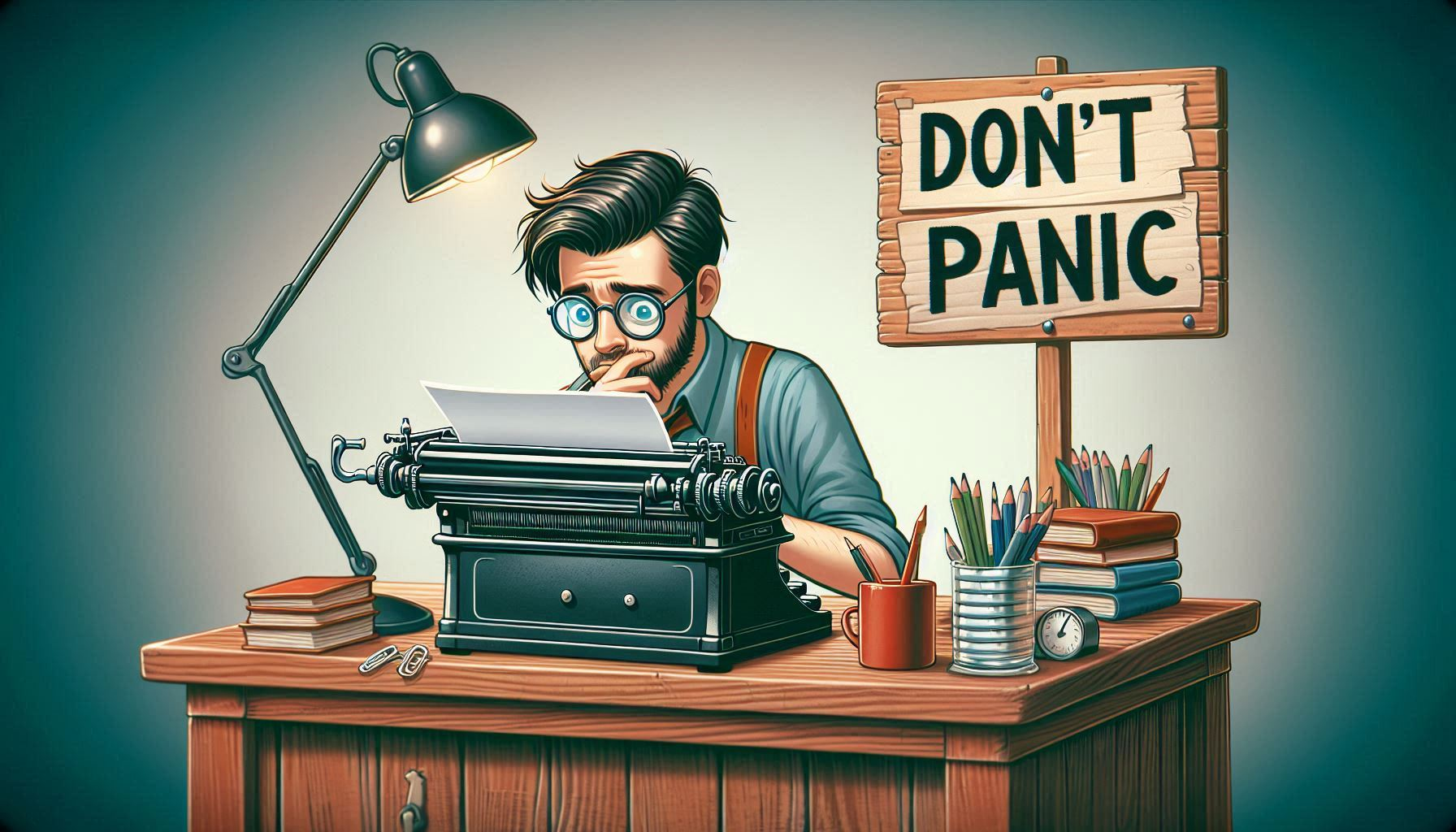
Don’t panic
Remember the tune “Video Killed the Radio Star”? Radio lives on. Teenagers love vintage vinyl and dusty old books made of paper.
So… DON’T PANIC.
Like the usefulness of a towel in intergalactic travel in The Hitchhiker’s Guide to the Galaxy (a classic read), AI will be your most useful companion from now onwards… if you remember to pack it and use it properly. Then your creativity, your love of words, your adventurous spirit is what will shine through.
What are Large Language Models and Why Should You Care?
If you don’t know what an LLM is, don’t worry. A year ago, I didn’t either. Read on. I want to talk to you about my experience with using Large Language Models (LLMs) to help create content, without any knowledge of coding. In fact, the only Python I know is a jelly snake.
Image created using Microsoft Copilot, powered by DALL-E 3
LLMs, like ChatGPT and Claude, are systems that can generate natural language text based on a given input. They are trained on massive amounts of text data from various sources, such as books, websites, social media, and news articles. They learn the patterns and rules of language, such as grammar, syntax, vocabulary and style from these data sources. They can then use this knowledge to produce new text that is coherent, relevant, and sometimes even creative.
Why should you care? Because LLMs can help you with many aspects of your writing process, such as brainstorming, researching, outlining, drafting, editing and proofreading. They can save you time, energy and frustration. They can also inspire you, challenge you and surprise you. Think of them as collaborators.
A Taste of AI-Powered Creativity
A few days ago, I was curious to see what an LLM could do to help me with a simple problem. I wanted to prepare a flavourful stir-fry for my partner, who can’t eat spicy food. Usually, I’d be scratching my head, resigning to a bland meal. Instead, I turned to claude.ai. Minutes later (after a little chat with Claude), I had a recipe for Zing-a-ling Veggie Noodle Stir-fry. It was delicious!
Here is the initial prompt I used:
Hello! My partner gets a reaction to onion, garlic, chilli, curry and strong spices, so he can’t eat that. Too much pepper is also no good for him. I want to make a stir-fry dish that is still flavourful without these ingredients, but I don’t want to use too many ingredients as it would spoil the dish. I have the following key ingredients: 250g superfood fresh sliced vegetables, 300 chicken breast and 450g fresh Hokkien noodles, 200g sliced mushrooms, and the following sauces: Fish, Hoisin, Oyster, Soy, Worcester, Tomato .Also in my pantry: olive oil and all the most commonly found ingredients in an Australian household. Ask me any questions you need to, then suggest a recipe with a list of ingredients, instructions and a catchy name for the recipe. Go!
The above is an example of a Vision (Multimodal) prompt using the following techniques:
Context Establishment: Providing background information and specific constraints to shape the response.
Detailed Instructions: Clear directives on what the response should include.
Constraints/Delimiters: Limitations that define the boundaries of the acceptable response.
Outcome Specification: Stating the desired outcome and expectations from the response.
Socratic Questioning: Inviting the model to ask questions if more information is needed.
Three Simple Ways to Use AI to Enhance Your Writing Without Losing Your Voice
This isn’t just about recipes; it’s a glimpse into how AI can spice up our writing without overpowering our unique flavours.
What I learned from many hours of study is that LLMs are not perfect, but they are powerful. They can help you generate ideas, find information and write faster. But they can also make errors, miss nuances and lack originality.
They can’t replace your voice, your style, your personality, your emotions, your values, your opinions, your experiences, your stories. They can’t replace you.
So, how can you use AI to enhance your writing without losing your voice? Here are three simple ways to use AI to improve your writing without losing your voice:
Use LLMs as tools, not as masters. Don’t let them dictate what you write, how you write, or why you write. Use them to assist you, not to replace you. In future posts, I’ll share how we can phrase prompts as a tool to best augment your text.
Tailored prompt engineering is the key!
Use LLMs as sources, not as authorities. Don’t blindly trust what they generate; check their facts, their logic, their tone, their ethics. Use them to inform you, not to deceive you.
My next post will explore this topic and the ways we can implement an ethical approach in our writing and content creation.
Use LLMs as partners, not as rivals. Don’t fear them, embrace them. Don’t compete with them, collaborate with them. Use them to inspire you, not to intimidate you. Future posts will look at ways we can channel AI for creativity.
As a first step, try CoPilot’s designer (see the next section)!
Explain your image by starting with: Please design a high-resolution digital image of… [e.g. a hippopotamus riding a bicycle on a beach at sunset, holding a sign that says, “Don’t Panic!”]. Be polite, detailed and specific. Trust me on the “polite” angle; the models are trained on human data. Be nice. Go!
Embrace the Change
Change can be intimidating, but it’s also a gateway to growth. In this series of posts, I’ll share tools, terminology and techniques to help you start, or get more effective, with AI-assisted writing. And I’ll offer advice as practical as a towel in intergalactic travel (thanks, Douglas Adams!).
Try it!
If you haven’t yet, sign up for ChatGPT. Here’s a simple guide:
Click “Sign Up” and create an account with your email or use Google/Microsoft for quick access.
Verify your email and choose between free or paid plans.
Start using ChatGPT by entering prompts in the chat window.
And/or… try a free trial of Microsoft Copilot.
Add Value
There is no value in regurgitation; any astute reader knows that if you “embark on a journey” or “navigate your course”, this is likely a trip arranged by AI. You want to retain your authentic voice. So do I.
I wrote this blog post from scratch, then got some help with headings, prompted for images and asked for feedback. Around 15% of this post was edited and rewritten as a result.
Conclusion
Stay tuned, and don’t panic. You are the writer; you have the power. You have the voice. Check in over the next few weeks to learn more about prompt engineering and the terminology of the day, along with practical tips to use this, important words about ethics and pitfalls, and more.
Share your thoughts and curiosities about AI in writing. Your insights will help shape the content of this blog.
Let’s Do This. Remember, in the vast universe of AI writing, don’t panic. And take a towel.
Image created using Microsoft Copilot, powered by DALL-E 3 & edited in Canva Pro
Yours in Zen and AI,
Annie.
If you need to meditate after this, I’ve got your back too. Head to YouTube.
Resources
LinkedIn Learning courses:
Generative AI: The Evolution of Thoughtful Online Search
Ethics in the Age of Generative AI
Streamlining Your Work with Copilot (formerly Bing Chat/Bing Chat Enterprise)
Career Essentials in Generative AI by Microsoft and LinkedIn
Work with Me
Are you looking to harness the power of AI for your business, or would you like me to prompt for you? Whether you need compelling blog posts, engaging content for your business, or polished PowerPoint presentations, I’m here to help. With expertise in AI-assisted writing and content creation, I can provide tailored solutions that meet your needs.
I wonder if CTM in Brookvale, Sydney Australia, still has NO PICK UP’S ON SATURDAY’S.
Misuse of the apostrophe is common and give a negative impression of an author’s writing skills…
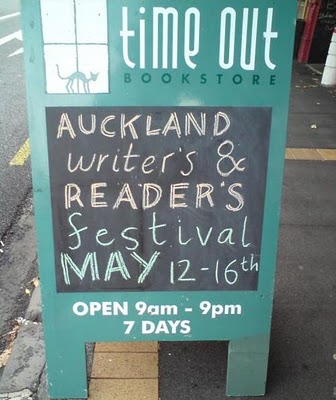
(from http://www.apostropheabuse.com/) – Richard writes: Here's some real exclusivity! A bookstore in Mt. Eden, Auckland, New Zealand is holding a festival for one writer and one reader. I wonder who the lucky pair were.
Here are some rules that are not difficult to remember.
Expressions of Time
It was previously conventional to use an apostrophe in expressions of time involving a plural reference, such as:
Six weeks’ time
Three months’ wages
The apostrophe is now often left out, i.e.:
Six weeks time
Three months wages
The sense of these phrases tends to be more descriptive than possessive.
When the time reference is in the singular, however, the apostrophe should be retained to help mark the noun as singular:
It’s the cat’s habit to chase its tale (this is a cat with character). It is: it’s. The nose belongs to it: its nose.
1. It’s = It is
2. Its = belonging to it
Numbers and dates
Numbers and dates, such as in his 60s, fly 767s, during the 1980s—All the regional style manuals including the Chicago Manual (2003) agree on this [no apostrophe]. Apostrophes are usually there in the plural of single numbers, as in All the 2’s and 3’s were missing.
If there are two or more owners, add ‘s’ then an apostrophe.
Ownership
Acknowledgement of others’ views… (Plural ‘others’—the views belonging to others)
The candidates’ views were not considered. (Plural of candidate)
If there’s one owner, add an apostrophe and then ‘s’.
… initiatives or strategic ways in which the successful candidate’s learning could be leveraged.
The exception to this rule is:
For words which form their plural by changing internal letters (instead of adding ‘s’), the apostrophe comes before the ‘s’.
It was the children’s turn to wash up.
Some other words which follow this rule are: men, women, people.
Joint ownership or association is shown by placing the apostrophe -s on the second of the two owners;
His mother and father’s legacy
Rutherford and Bohr’s atom
In contrast, where the ownership is not joint, each name takes and apostrophe;