The colon is often used to introduce a list of items, for example: You will need to bring three things to the party: some food, something to drink, and a small gift for the hostess.
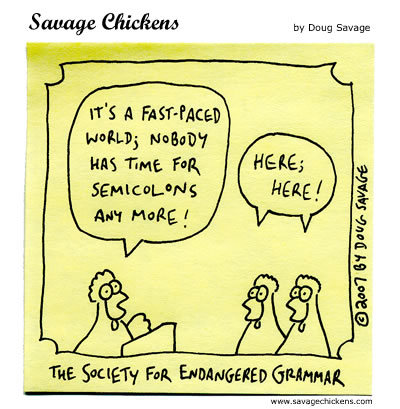
The semi-colon is often used to join together two independent clauses—in other words, it joins two clauses that could be sentences: Frank drives a Ferrari; Mike drives a Lamborghini. OR: to join two clauses using a transition such as however, therefore, on the other hand, etc.
Semi-colons should be used to mark a pause longer than a comma and shorter than a full stop. Don’t overdo them. Use them to distinguish phrases listed after a colon if commas will not do the job clearly. Thus, ‘They agreed on only three points: the ceasefire should be immediate; it should be internationally supervised, preferably by the AU; and a peace conference should be held, either in Geneva or in Ouagadougou.’
Sometimes idioms and expressions are so overused that they grate on the ear. I still believe colourful language can paint a more vivid picture and present ideas clearly, but of course there is no point using technical (I D 10 T computer error) or business (acronyms!) jargon to confound others; or overusing idioms for the sake of expanding writing. Like a diamond, prose often shines more brightly when cut.
My husband has a real issue with the word ‘issue’ and the term ‘touch base’. When I touched base with him on this issue, he proclaimed that he much prefers dealing with plain old problems than issues, and is happy to discuss matters but prefers not to be touched, especially ‘base’, by colleagues and acquaintances. I, on the other hand, try to avoid issues and problems, and the need to touch base about either.
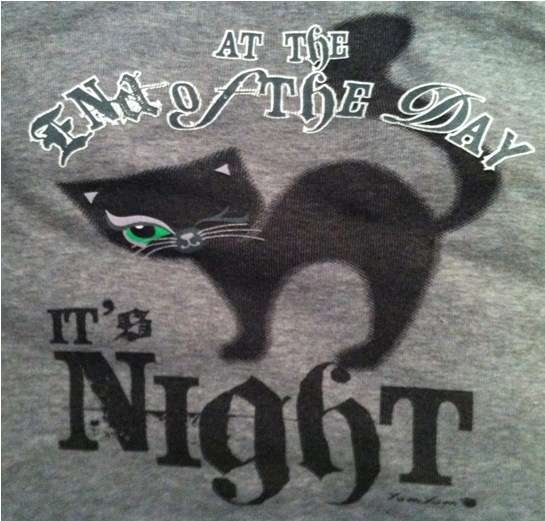
In 2004 the Plain English Campaign asked supporters in more than 70 countries which clichés they thought were the most annoying. Supporters voted ‘at the end of the day’ as the most irritating phrase in the English language.
Second place in the vote was shared by ‘at this moment in time’ and the constant use of ‘like’ as if it were a form of punctuation. ‘With all due respect’ came fourth.
Overused phrases can be a barrier to communication. As noted by a Plain English campaigner, ‘When readers or listeners come across these tired expressions, they start tuning out and completely miss the message—assuming there is one.’ George Orwell’s advice is still worth following: ‘Never use a metaphor, simile, or other figure of speech which you are used to seeing in print.’
The following terms also received several nominations.
24/7
absolutely
address the issue
awesome
ballpark figure
basically
basis (‘on a weekly basis’ in place of ‘every week’ and so on)
bear with me
between a rock and a hard place
blue sky thinking
boggles the mind
bottom line
crack troops
diamond geezer
epicentre (used incorrectly)
glass half full (or half empty)
going forward (um… or … MOVING FORWARD)
I hear what you’re saying …
in terms of …
it’s not rocket science
literally
move the goalposts
ongoing
prioritise
pushing the envelope
singing from the same hymn sheet
the fact of the matter is
thinking outside the box
to be honest/to be honest with you/to be perfectly honest
touch base
value-added (in general use)
Plain English Campaign Foot in Mouth award – Lord Peter Mandelson
For his comment on the investigations into MP’s expenses .
“Perhaps we need not more people looking round more corners but the same people looking round more corners more thoroughly to avoid the small things detracting from the big things the Prime Minister is getting right.”
Plain English Campaign 2009 Golden Bull award –Dublin Airport Authority for a 109 word clause on contractors’ agreement
(c) Neither the execution and delivery by the Consultant of this Agreement nor the consummation by it of any of the transactions contemplated hereby, requires, with respect to it, the consent or approval of the giving of notice to, the registration, with the record or filing of any document with, or the taking of any other action in respect of any government authority, except such as are not yet required (as to which it has no reason to believe that the same will not be readily obtainable n the ordinary course of business upon due application therefore) or which have been duly obtained and are in full force and effect.
‘Maeve Livingstone. Worried widow of Morris. Needs reassurance. Fair words and fine promises. Rome was not built in a day. The actual business of sorting out Morris Livingstone’s estate and getting money to her continues unabated. Phones me practically daily for hand-holding. Meanwhilst, I turn the task over to you,’
‘Right,’ said Fat Charlie. ‘So, um. No rest for the wicked.’
‘Another day, another dollar,’ said Grahame Coats, with a wag of the finger.
‘Nose to the grindstone?’ suggested Charlie.
‘Shoulder to the wheel,’ said Grahame Coats. ‘Well, delightful chatting with you. But we both have much work to do.’
‘A balance has to be struck between so many capitals that the eyes dance and so few that the reader is diverted more by our style than by our substance. The general rule is to dignify with capital letters organisations and institutions, but not people. … Even these, however, leave some decisions to individual judgment. If in doubt, use lower case unless it looks absurd. And remember that “a foolish consistency is the hobgoblin of little minds” (Emerson).’
‘The global digital network … grew out of a more local system developed by the US military during the 1970s as part of a defense strategy, which was simply the internet. … Given that internet had no capital letter in the first place, and the generic nature of its use, the decapitalised form makes sense. … Though Internet dominates in British and American English at the turn of the millennium, it can only be a matter of time for it to be decapitalised.’
Comments following a post on capitalising proper nouns (Grammar Girl) discusses this, with the final comment: ‘Small “i” is the wave of the future.’
Titles
For in-page titles and headings (such as news articles), only capitalise the first word and any proper nouns. Do not end the heading with a full stop.
Titles of books, magazines, reports
Capitalise the main words. Use italics for titles of books, films, plays and periodicals.
Use regular font (not bold, not italics) in quotation marks for article titles, report titles, chapter titles and shorter poems.
Titles of jobs
Lowercase in general:
The chief accountant resigned.
But when referring to a person and their job title, this should be in capitals:
Joe Smith, Head of External Affairs
Titles of people
Capitalise the specific president of any country, lower case a general mention:
Many admired Professor Brown.
UQ will employ a new professor.
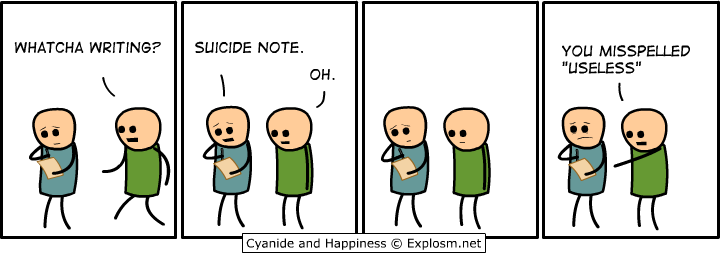
Finally, an old rhyme and a suicide note:
If an S and an I and an O and a U
With an X at the end spell Su;
And an E and a Y and an E spell I,
Pray what is a speller to do?
Then, if also an S and an I and a G
And an HED spell side,
There’s nothing much left for a speller to do
But to go commit siouxeyesighed.
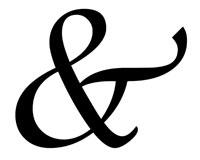
The ampersand (&) is not used for general purposes in printed text. Its use is restricted to company names and titles in display work, and it is sometimes used in references to the work of joint authors or editors, in bibliographies or in parentheses, e.g.:
Bell P & Bell R (eds) 2007, Americanization and Australia, University of New South Wales Press.
In the body of the text, the word ‘and’ itself replaces the ampersand.
An ellipsis (three dots) may be used to indicate either a pause in speaking or an omission of one or more words in a quoted passage. There should be a space before and after the ellipsis.
‘Sigh no more, ladies … men were deceivers ever.’
If something is left out between sentences, use an ellipsis at the end of the sentence. A sentence ending in an ellipsis may conclude with an additional full stop , however this is not obligatory.
An ellipsis can indicate a trailing thought. In this instance, do not leave a space between the last word and the ellipsis.
‘The man was clearly telling the truth. But then again….’
Often called a dash, the em rule (—) is approximately the length of the letter m. It is set close up to words on either side of it (i.e. no spaces on either side). Use:
As parentheses when the break in the sentence is abrupt, e.g. ‘We went far away—far away from the demands of city life—to write up our research.’
For gathering up, amplifying, explaining, e.g. curiosity, reverence for nature, pleasure in conversation, respect for privacy—all these qualities could be developed by anyone.
To show abrupt changes, e.g. ‘I went to Rome to see the churches, to Paris to look at the galleries, to Vienna to hear opera—but I see I’m boring you.’
For Australian Government publications, do not use a spaced en rule as a substitute for an em rule.
On the PC in Word, an em rule is Alt Ctrl (Num) –
(* If you’re ever trying to write something to confuse the reader, use lots of em dashes. Start and stop thoughts willy-nilly. In dialogue, this is a great way to imply the speaker is scattered. – Tom Schoenborn)
En dash
En rules (–) are about half the size of em rules and about the width of a letter n. Use:
In spans of figures relating to time or distance, e.g. pages 306–7, calendar year 1997-98, April–June, sections 163–75.
To express an association between words that retain their separate identity, e.g. Commonwealth–State Agreement, cost–benefit ratio, hand–eye coordination (note that this doesn’t apply to adjective compounds like ‘colour-blind’ or ‘icy-cold’ which can take a hyphen).
Link elements that are parallel or in series; link nouns with nouns, adjectives with adjectives and so on, e.g. Australian–American research team.
Link a prefix to a phrase, e.g. pre–World War II, pre–Howard Government; however use a hyphen to link a prefix to a word, e.g. Neo-Gothic.
On the PC in Word, an en rule is Ctrl (Num) –
Source: The APS Guide 8—Authoring, Australian Public Service Commission.
Agreement refers to the matching of words within a sentence in terms of their number (singular and plural), and in terms of gender or person. A traditional name for the concept in English and other languages is concord.
Verb-subject agreement
Matching pronouns with verbs is straightforward enough, until you come to cases like:
Neither she nor I ?am/?is/?are inclined to go.
One or both of us ?is/?are wrong.
None of the alternatives sits comfortably in those sentences. The best way out of the problem is to remake the sentence:
Both she and I are disinclined to go.
One of us is wrong, or both of us.
With indefinite pronouns (e.g. either, neither, nobody, no-one, something), those ending in -one, -body, -thing simply take a singular verb on all occasions. But with others, a plural verb is a possibility:
Any of the books he wrote is/are worth reading.
None of their suggestions appeal(s) to us.
A singular verb in such examples singles out one item, whereas the plural suggests that the writer has the whole set in mind.
Agreement between pronouns
Everyone likes ?his/?her/?their own clothes.
In strictest grammar, the pronoun should be either his or her in such cases. But the exclusiveness of opting for one gender on the other (and the clumsiness of saying ‘his or her’) makes many people use their. Because it is gender–free, their helps to maintain the generality of the statement, and in many contexts this is preferable. Their is certainly being used in this way very often in speech, and increasingly in writing. A newspaper cartoon not so long ago had the Prime Minister saying:
Everyone has to pay their tax!
The use of their in singular agreement with indefinite pronouns is accepted as ‘standard idiom’ by the Australian Government Style Manual.
Make sure that plural nouns have plural verbs, e.g. Kogalym today is one of the few Siberian oil towns which are [not is] almost habitable. What better evidence that snobbery and elitism still hold [not holds] back ordinary British people?
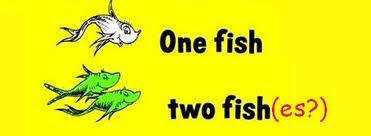
The manager of a large city zoo was drafting a letter to order a pair of animals. He sat at his computer and typed the following sentence: “I would like to place an order for two mongooses, to be delivered at your earliest convenience.”
He stared at the screen, focusing on that odd word mongooses. Then he deleted the word and added another, so that the sentence now read: “I would like to place an order for two mongeese, to be delivered at your earliest convenience.”
Again he stared at the screen, this time focusing on the new word, which seemed just as odd as the original one. Finally, he deleted the whole sentence and started all over. “Everyone knows no full-stocked zoo should be without a mongoose,” he typed. “Please send us two of them.”
(The word mongoose comes from mangus, a word from the Indic language Marathi; thus the plural is more widely understood to be “mongooses”.)
Singular or plural agreement for organisations’ names?
While either singular or plural agreement is grammatically correct, the singular is recommended in Australian Commonwealth publications—both for consistency and to present a cohesive image in references to government bodies and activities.
For consistency, follow this recommendation. Thus:
Virgin employs great people.
KPMG offers Development Centres for Partners.
The Bureau of Meteorology has been quick to respond.
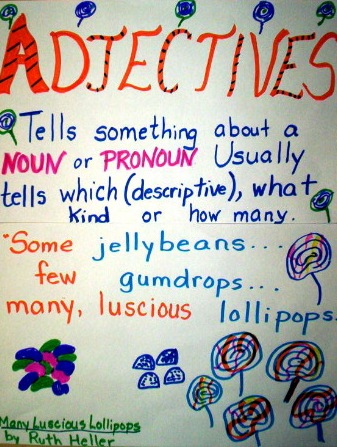
Adjectives provide colour, flavour and sparkle to our language. However, some words add nothing but length to your writing; particularly when it comes to formal prose. Use adjectives to make your meaning more precise and be cautious of those you find yourself using to make it more emphatic.The word very is a case in point. If it occurs in a sentence you have written, try leaving it out and see whether the meaning is changed. ‘The omens were good’ may have more force than ‘The omens were very good’.
Adjectives have three types of role: evaluative, descriptive and definitive. In a string of adjectives preceding a noun, commas are generally required only between adjectives of the same type. For example:
The shrub has large, serrated, shiny, heart-shaped leaves. [all descriptive]
Success will depend on hard-working, committed local residents. [two descriptive, the third definitive]
He is a collector of fine old red wines. [evaluative, descriptive, then definitive]
If an adjective is modifying another adjective, you do not separate them with a comma, e.g. ‘She wore a bright red shirt.’
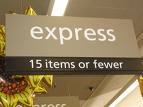
‘Fewer’ and ‘less’
The issue of choosing between fewer and less with plural nouns is readily resolved in the context of the intended register. In formal writing, fewer is used with a plural count noun, and less is reserved for the singular mass noun:
fewer positions; less unemployment
This distinction … does not hold for the corresponding word more, which is used with both plural count nouns and singular mass nouns (‘more retrenchments’, ‘more unemployment’).
via Grammar Police: Less, Fewer: Both less and fewer mean not as much of something, but fewer should be used if you can count the number of the object. For example:
Be aware that there are some adjectives and adverbs that should not be compared because of their meanings.
One of the most frequently mis-compared adjectives is unique, meaning one of a kind. Something cannot be more unique or most unique. Something is either one of a kind or it isn’t. Adjectives like this (and their adverbial forms) are absolute; absolute itself is an absolute adjective.
Among others to watch out for are essential, meaning absolutely necessary; universal, meaning present everywhere; and immortal, meaning living forever.
With these adjectives and adverbs, something either is or it isn’t, and therefore comparative degrees are meaningless.
What is an Absolute Adjective?
An absolute adjective is an adjective which functions as a noun.
This term absolute adjective is applicable, by extension, to other parts of speech which are used similarly, such as possessive pronouns or numerals.
For example: The poor or The mystical in Blake’s poetry
An absolute adjective describes a quality that has no degree. Absolute adjectives should not be used in comparisons and should only be modified by adverbs such as “nearly” or “almost.”
Short and long term
He is conscious of goals in the long term. (Not an adjective, thus no hyphen). He is conscious of long-term goals. (Long-term, as an adjective, takes a hyphen), e.g. ‘He has a much stronger tendency than most to focus on the long term’ (NOT ‘to focus on the long-term’).
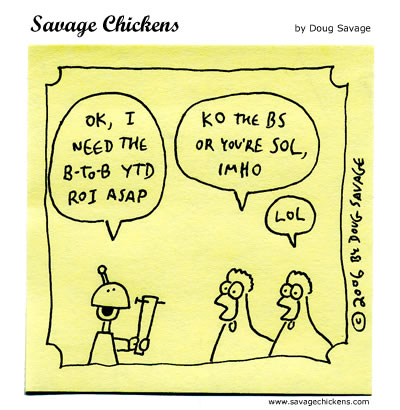
Many of us may have been introduced to a new company only to find that we don’t understand the language of its people; or of our new job… due to the many acronyms! And interestingly, long-standing employees often are not exactly sure what those acronyms mean….
Others, me included, find ourselves at times a little lost when faced with the evolving language of text and tech, in which case the acronym finder (which claims to be the world’s largest and most comprehensive dictionary of abbreviations and acronyms) can be handy.
Here are some current rules of the road.
Abbreviations that are formed by using the first initials of separate words should not have any full stops after the letters: OPQ, US, UK, PJM
Acronym: this is a word, like radar or UNICEF, not a set of initials, like the ABC or FBI.
Write out years not yrs, even if part of a quote.
Make an acronym or abbreviation plural by adding an s (no apostrophe), for example OPQs, WSQs.
Spell out any unfamiliar abbreviations and acronyms at first mention, with the abbreviation immediately following in brackets, for example: Occupational Personality Questionnaire (OPQ). When mentioning again later in the same document, use the abbreviation only.
Abbreviate the names of days as follows (note the full stops):
In 1943, David Davis of Bell Laboratories coined the term acronym as the name for a word created from the first letters of each word in a series of words (such as sonar, created from sound navigation and ranging).
Although the term acronym is widely used to describe any abbreviation formed from initial letters, most dictionaries define acronym to mean “a word” in its original sense, while some include a secondary indication of usage, attributing to acronym the same meaning as that of initialism. According to the primary definition found in most dictionaries, acronyms examples include, NATO, scuba , and radar, while examples of initialisms would include FBI and HTML.
There is no agreement on what to call abbreviations whose pronunciation involves the combination of letter names and words, such as JPEG and MS-DOS.
The term for the word-by-word reconstruction of an acronym or initialism is an expansion.
…
And finally some definitions…
WWW: World Wide Wait
DOS: Defective Operating System
CD-ROM: Consumer Device – Rendered Obsolete in Months
To: All EMS Personnel From: Chief of Operations Subject: Proper Narrative Descriptions
It has come to our attention from several emergency rooms that many EMS narratives have taken a decidedly creative direction lately. Effective immediately, all members are to refrain from using slang and abbreviations to describe patients, such as the following:
1) Cardiac patients should not be referred to as suffering from MUH (messed up heart), PBS (pretty bad shape), PCL (pre-code looking) or HIBGIA (had it before, got it again).
2) Stroke patients are NOT “Charlie Carrots.”
Nor are rescuers to use CCFCCP(Coo Coo for Cocoa Puffs) to describe their mental state.
3) Trauma patients are not CATS (cut all to sh*t), FDGB (fall down, go boom), TBC (total body crunch) or “hamburger helper”.
Similarly, descriptions of a car crash do not have to include phrases like “negative vehicle to vehicle interface” or “terminal deceleration syndrome.”
4) HAZMAT teams are highly trained professionals, not “glow worms.”
5) Persons with altered mental states as a result of drug use are not considered “pharmaceutically gifted.”
6) Gunshot wounds to the head are not “trans-occipital implants.”
7) The homeless are not “urban outdoors men”, nor is endotracheal intubation referred to as a “PVC Challenge”.
8) And finally, do not refer to recently deceased persons as being “paws up”, ART (assuming room temperature), CC (Cancel Christmas), CTD (circling the drain), DRT (dead right there).
 The colon is often used to introduce a list of items, for example: You will need to bring three things to the party: some food, something to drink, and a small gift for the hostess.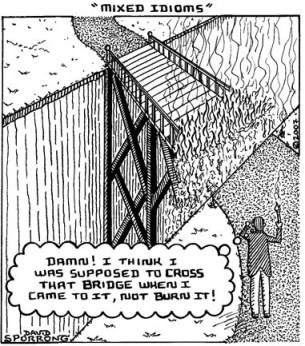
 Ascension Coastal